|
Communication Teambuilding activities
Exit Interviews: This is an excellent process to gather information from employees who are leaving the organization. This information needs to be kept confidential and shared with only top management so corrective action can be taken in the organization. The best pratices is to conduct one and one structured interview with the employee leaving the organization. Another approach is to recruit a Human Resource management-consulting firm and have them conduct telephone exit interviews, or using e-mails. It is important to keep your exit interview information for future use or legal issues that may arise. Focus groups: Focus groups have been used for many years in the marketing department and for consumer research. Focus groups can be used for teambuilding to solve problems and improve productivity in companies. These groups should have staff from different departments and different stakeholders. The best size for discussion is between 5-7 members. Limit the focus groups to tackle three different issues or concerns and limit to one-hour discussion. Identify a leader for each table and scribe to record the key comments. The group facilitator needs to roam the room and listen to the discussions. After each small group discuses the issues, bring the large group with a summation of the three issues.
Active listening skills: Introduce a mini-one hour workshop to introduce the techniques for active listening skills. Identify key trainers in your company to introduce the importance to active listening. Make this mini-workshop a fast paced workshop and fun event. Assertive training Explain the differences of assertiveness and aggressive behavior. Develop a role-play to demonstrate these three different styles to handle conflict: passive, aggressive and assertive. Emphasize the need to be assertive during a situation that involves conflict. Attitude surveys can be an effective tool for teambuilding. You need to react to the results from the survey. If management does not react to the survey, then employee moral can decline. Do not take a attitude survey, if you do not plan to take corrective action to the results of the survey. Actions speak louder than words
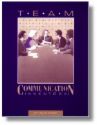
Team Communication Inventory
Improve the overall quality of your team discussions and meetings with the TeamCommunication Inventory (TeamComm), an instrument designed to identify the roles team members typically play during team interaction. How it works
Using a specific discussion or meeting to evaluate, respondents rate themselves on the use of 7 Task Roles and 7 Maintenance Roles. Individuals then gain additional insight into their behavior. Finally, action plans help teams make specific plans for improvement - as individuals and as a group.
The Participant Booklet includes pressure-sensitive scoring and perforated response cards to facilitate the feedback process. In addition to administrative guidelines and theoretical background, the Facilitator Guide includes tips on strengthening task and maintenance roles, a sample training design, and transparency masters. TeamCommunication Inventory is a great follow-up tool for team building. Go to HRDQ and then click on teams:
Johari Window works for teambuilding ! TeamShare Assessment
TeamShare provides an opportunity for teams to explore how open they are in their communication patterns. It provides a structured experience in which teams can gradually gain experience in opening up, and giving and receiving feedback. TeamShare was designed to help team members who are having difficulty in being open within the team. The instrument begins with a self-analysis, moves to a partner analysis, and then finally to a full team discussion. The exercise is structured in this manner to allow participants to gain experience in the feedback process in a non threatening manner. The exercise includes discussion questions and action planning so that team members can continue to increase the openness of their team communication. TeamShare introduces team members to effective feedback processes and gives them the tools they need to continue improving the process. A Model of Team Communication TeamShare applies the Johari Window theory of interpersonal communication to team communication patterns. This theory, developed by Joseph Luft and Harry Ingham (Luft, 1969), describes how individuals give and receive information about themselves and others. In an ideal communication situation, the words, ideas, and feelings of the sender of the communication would have the same meaning to every receiver of that communication. Unfortunately, as Luft and Ingham realized, in any interaction there is information that is known to some individuals and unknown to others. The Johari Window examines the interchange of information by presenting four modes of information sharing based on what information is known or unknown to the self and to the other parties to that communication. When to use TeamShare TeamShare is beneficial for teams that are having difficulty sharing information. In the TeamShare experience, teams are provided with a vehicle for helping team members gain an increased feeling of trust and begin to engage in fruitful dialogue about the team's patterns of communication. Teams that tend to be closed and hold back in team discussions can use TeamShare to engage in a non threatening examination of the openness of the team's communication. Team members will also gain experience in giving and receiving feedback HRDQ can help you with this team building toll. Click now: Go to the team section .
Icebreakers
Teambuilding Quotes
OPEN YOUR EYES TO A
BETTER WAY OF COMMUNICATING
Studies show that learning accelerates and deepens when the whole brain is engaged. The problem is, most traditional training methods only call upon the rational part of our minds - usually through verbal communication. But by building a bridge between the right and left sides of the brain, learners can tap into a richer set of data from which to make critical choices and decisions.
Now there is an exciting new tool available to trainers that enriches the learning experience for their audiences. From author Christine Martell, VisualsSpeak™ is a training game that uses 200 different, thought-evoking photographs to help learners gain access to the subconscious parts of their psyches. The memories and associations that emerge through visual images are quite different from those stimulated through verbal communication alone, so learning is faster, more interesting, and more effective.
The VisualsSpeak approach is both versatile and customizable. It has numerous applications, from team building and conflict resolution to goal setting and diversity, so you can use it again and again to uncover valuable insight on a wide range of individual and organizational levels. Best of all, your audience will find the game fun, non-threatening, and very powerful.
Click on the HRDQ box to learn more about VisualsSpeak and how it can enhance your next training session.
TeamShare: Johari Window Theory What's your communication style?
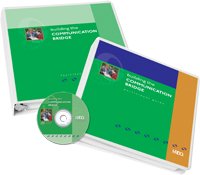
The more we know about ourselves as speakers and listeners, the better able we are to build the “communication bridge” that allows us to send, receive, and interpret messages with ease. Building the Communication Bridge helps to provide that needed insight. Complete and ready-to-train, the program focuses on the basic speaking and listening skills needed for successful face-to-face interactions. Using a combination of experiential tools such as learning instruments, activities, and hands-on games, participants discover how their roles and styles as speakers and listeners drive the communication process and practice the skills that enable them to improve everyday communication. Identify personal styles of communication. Develop strategies for communicating with people of different styles. Understand the behaviors that distinguish receptive listeners, Determine which listening behaviors are representative of one’s communication style. Learn how to use speaking and listening skills in a variety of organizational communication situations. Theory
Download the complete Theoretical Background. How It Works Uses for the Program The program’s flexible training design allows facilitators to present Building the Communication Bridge in one day or 2 half-days, or combine the program with other training sessions to create an expanded learning experience.
The Power of Visual Communication Webcast Duration: 44 minutes
Christine is an accomplished consultant, public speaker and artist with more than 25 years of professional experience. She earned a master’s degree in education from Portland State University in 2004, where she researched the benefits of visual communication as a training tool. Christine also holds certificates of completion in a variety of training & development topics including intercultural training, multi-media and Web-based training, and management of training. She founded the VisualsSpeak company in 2005 as a way of bringing the visual communication approach to a broad range of audiences.

Custom Search
Custom Search
Copyright 2008-2012 Teambuilding-Leader.com

|